Introducing ForEngLeaders.com: a little recognition for a lot of responsibility

AI coding tools are raising expectations for how quickly engineering teams can deliver software. Engineering and platform leaders still answer for the quality and reliability of what ships.
Platform leaders especially have to support that faster pace across everyone’s tools, pipelines, and exceptions, while keeping engineering standards enforced. The platform roadmap still needs to move forward, too.
We built For Eng Leaders for the engineering and platform leaders doing that work. It’s a free collection of shirts with jokes your team won’t need explained like “I herd cats. The architecture doc says cattle.” and “Trust me. Actually, run the checks.”
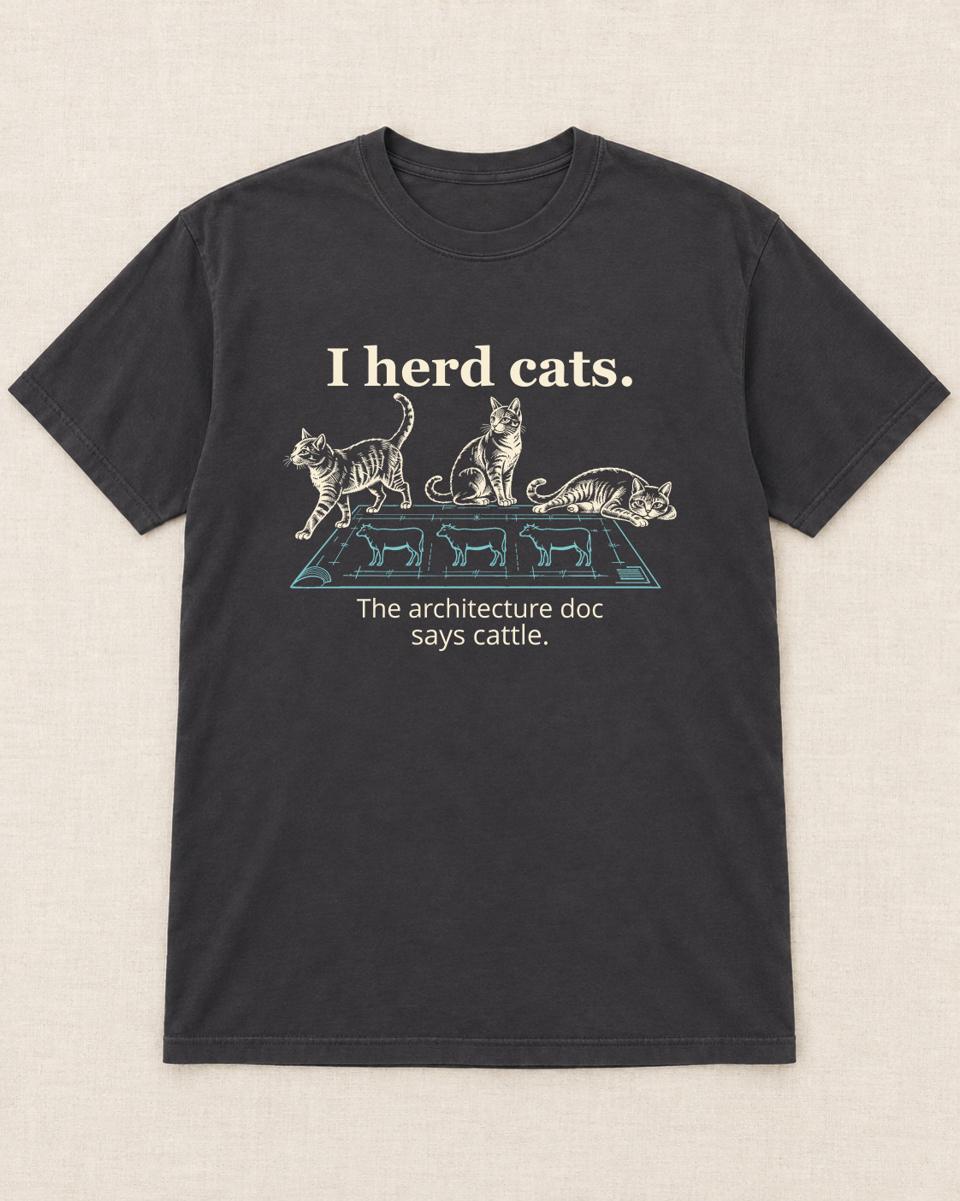
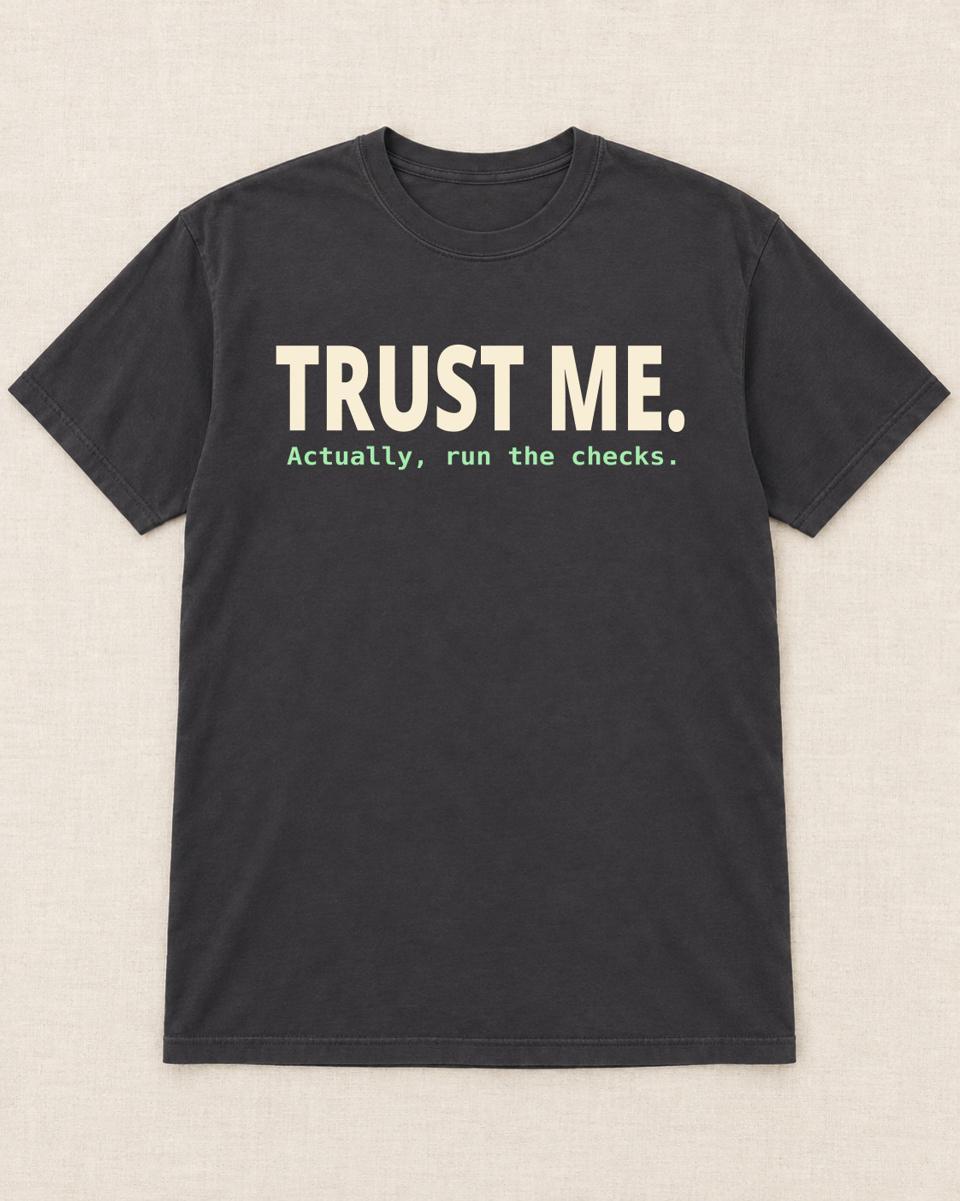
A little recognition for work that rarely gets its own launch party.
There’s a serious reason we’re re-introducing ourselves this way, too.
For years, engineering leaders have documented standards, set review expectations, and used postmortems to push for lasting improvements. Platform teams have built shared CI templates, written enforcement scripts, maintained policy engines, and chased migrations across hundreds of services to make those standards stick. Both have taken on that work alongside everything else the business needed from them.
Those investments solved real problems. They also left a familiar set of unfinished jobs. The template reaches the teams that adopt it. The script works until a tool changes its output. The policy engine evaluates the data someone manages to collect. A postmortem produces a new requirement, and the platform team starts another rollout.
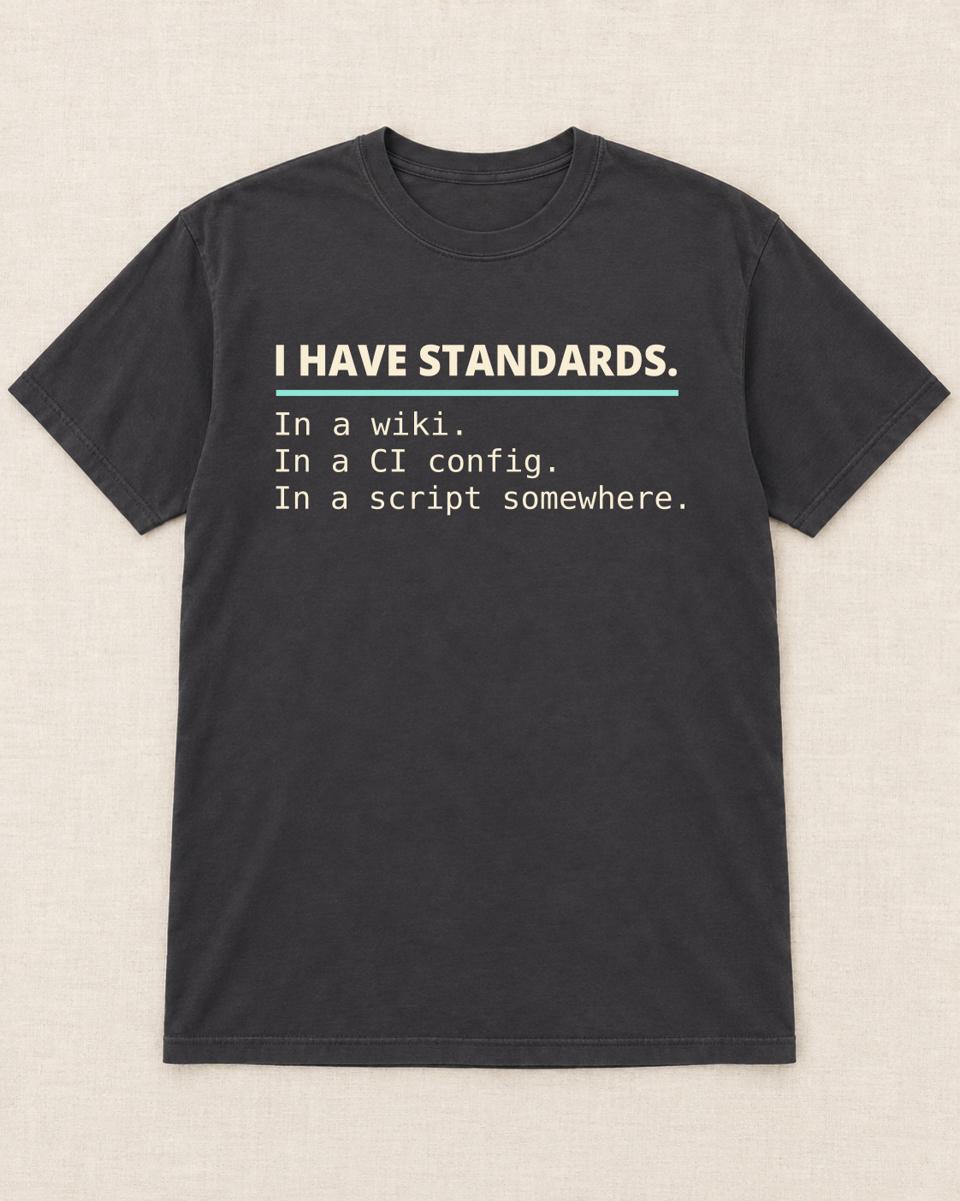
Then AI adds more and more code.
Standards enforcement was already difficult. Now the gap between how quickly code can be produced and how reliably it can be checked is harder to accommodate. Human reviewers have finite time. Asking them to repeatedly catch missing tests, outdated dependencies, and skipped controls leaves less time for the judgment calls that need an experienced engineer.
DORA’s March 2026 analysis of feedback from 1,110 Google engineers found a recurring tradeoff: faster code generation shifted work into verification and review. Its recommendations include moving automated checks into the authoring workflow, before the code reaches a human reviewer.
All that to say, we think this is the inflection point for engineering guardrails. Enforcement needs to keep pace with the work, including the work produced by AI agents. It has to reach custom pipelines and older services as well as the teams on the golden path. It also needs to produce a continuous record of what was checked, what passed, and where standards aren’t being met, so leaders can act on gaps and supply audit evidence without a separate project to reconstruct it.
That level of enforcement requires guardrails teams can trust. Deterministic checks produce the same result from the same evidence; central management keeps standards consistent across repositories and workflows. Those properties matter when a failed check can block a pull request or stop a release.
Earthly has been building developer infrastructure since 2020. Many engineers first encountered us through Earthfiles, our open-source build tooling. That work shaped how we approach the complexity of builds and CI.
Through that work and our conversations with engineering and platform leaders, we kept hearing how hard it was to know what teams were actually doing and get agreed standards enforced. We built Lunar to give those leaders a central way to turn standards into automated checks across the organization.
Earthly Lunar instruments repositories and CI/CD centrally, normalizes what it observes, and evaluates engineering standards against that evidence. The same deterministic guardrails run in AI authoring workflows, on pull requests, and at deployment gates. Lunar works with teams’ existing tools and supplies central data collection and 300+ prebuilt guardrails. Built-in AI skills help turn organization-specific requirements into custom collectors and policies.
Here’s how customers are using Lunar:
One engineering team with demanding release requirements has automated SBOM generation and uses license checks to block pull requests containing disallowed licenses. Work that previously surfaced as a release-time scramble is being addressed during development.
Another large engineering organization is rolling out standards across existing repositories and tracking adherence in scoring mode. The team is establishing visibility and understanding the impact before moving to broader blocking.
In financial services, one engineering leader describes moving work handled by a 20-person manual governance function into deterministic enforcement with Lunar.
The teams we work with operate in complex environments, with varied tools, pipelines, and requirements. Lunar takes on automated standards checks and the data collection behind them, reducing repetitive review, custom scripting, and manual evidence gathering. That frees engineering time for the product and platform work those teams are there to deliver.
We want more platform and engineering leaders to see what’s now possible: enforcing a new standard across existing repositories and pipelines without waiting for every team to adopt a template or install a check. That gives platform teams a way to keep up with new requirements while protecting time for the work only they can do.
Which brings us back to the shirts.
Engineering and platform leaders spend a lot of time backing their teams. We thought you could use a little backing yourselves.
Yes, we’d like you to know about Lunar. We’ll tuck a short introduction into your kit, and you can decide whether it’s the right time to connect with our team and see how Lunar would work with your existing checks. The shirt, stickers, and shipping are on us. No purchase, demo, or meeting required. You’ve probably got enough meetings about enforcing the standards everyone agreed to three meetings ago.
If your platform team is trying to keep up with standards enforcement, bring us an engineering requirement that’s overdue, a pain to enforce 100%, or tied to an approaching deadline. We can show you how Lunar would check it and where enforcement would fit into your workflows.
Or if you’re here because “external emotional support for the internal developer portal” describes your job a little too accurately, we understand.
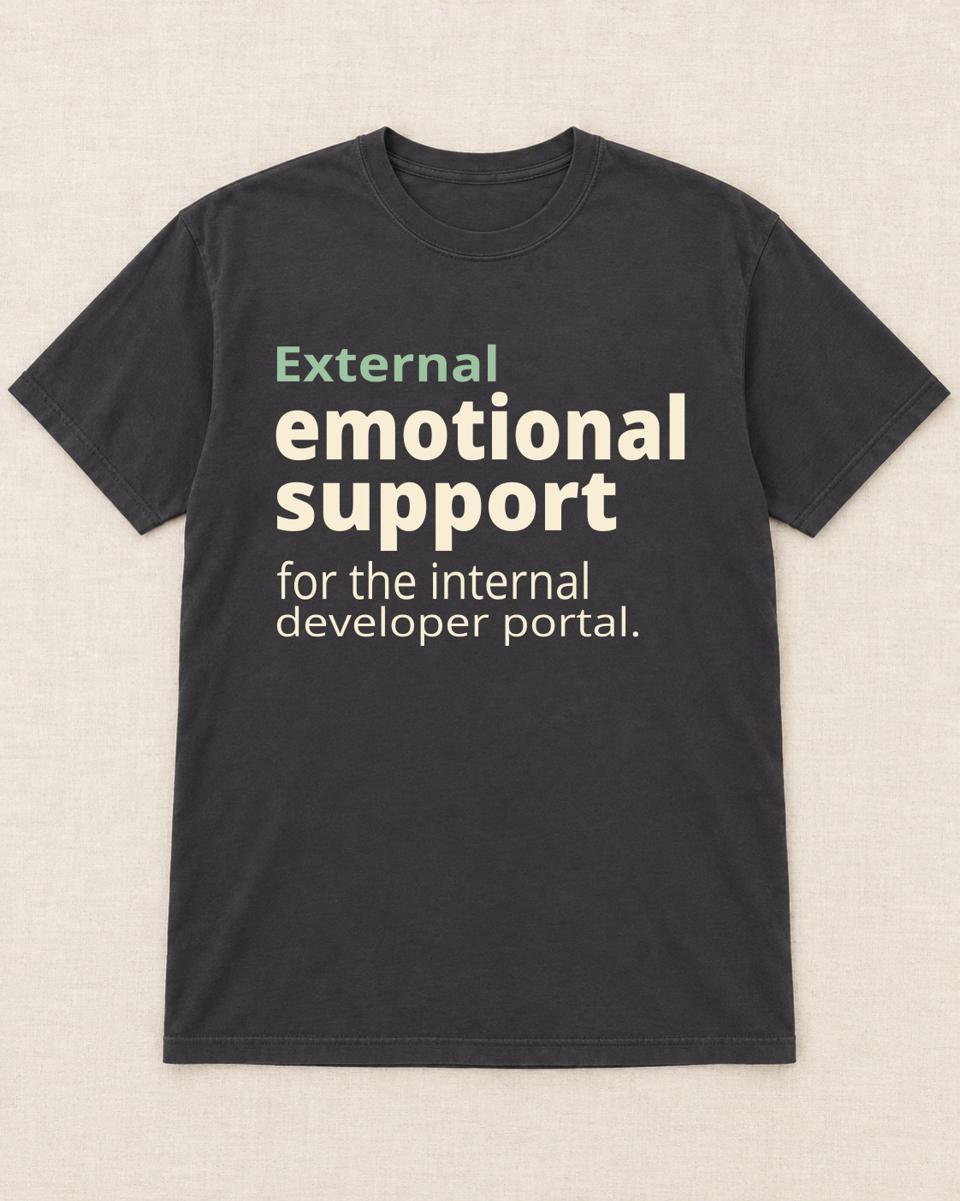
Pick a shirt that’ll make your team laugh at the next standup.